
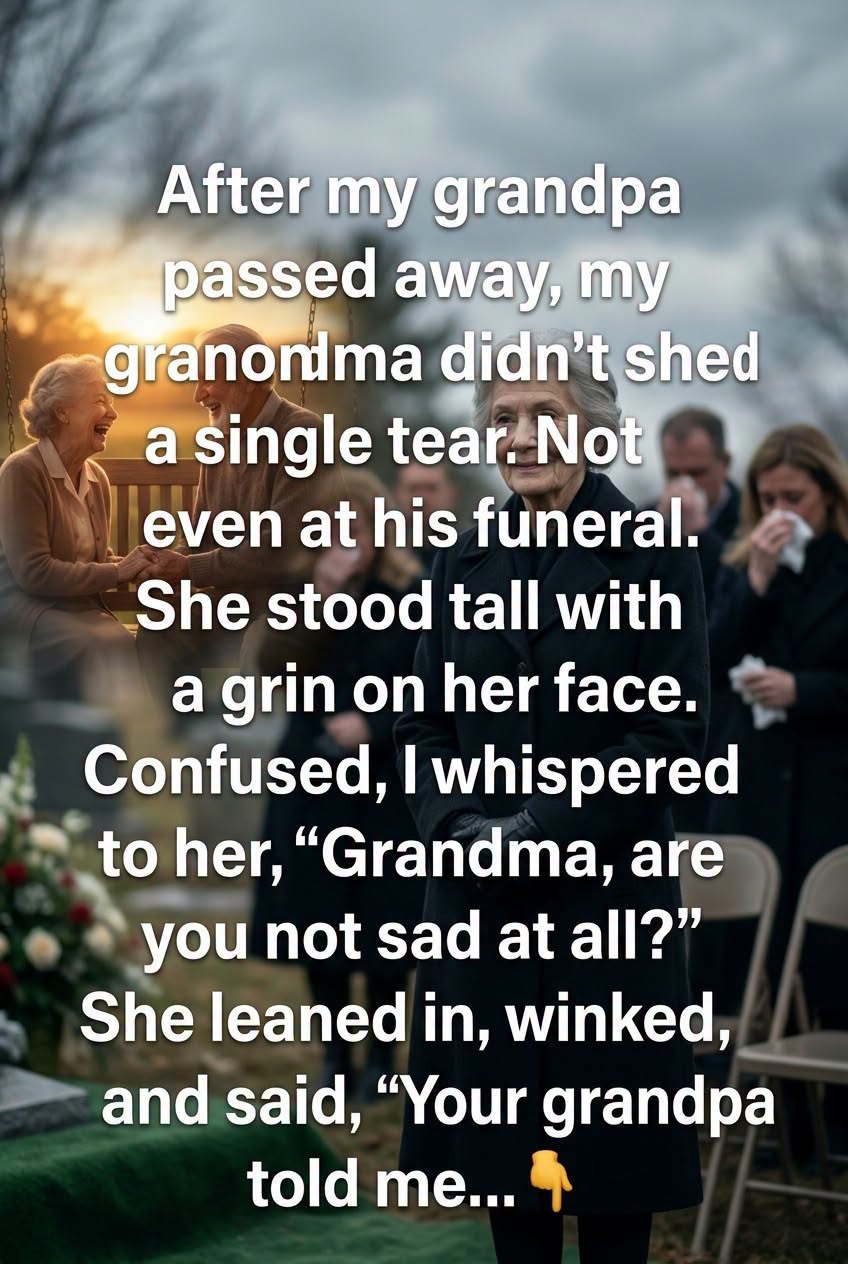
My grandmother stood quietly beside my grandfather’s casket on the day we said goodbye to him. Throughout the service, she remained composed. As a child, I found that difficult to understand. I expected grief to look different.
Later, I asked her how she had managed to stay so calm.
She smiled gently and told me about a promise she had made
Before he passed away, my grandfather had asked her not to spend the rest of her life consumed by sorrow. He did not mean that she should never grieve or never cry. Rather, he hoped she would continue living fully, appreciating the years they had shared instead of becoming trapped by the pain of losing him.
That request stayed with her.
In the days before his death, my grandfather often spoke about his life with gratitude. He felt blessed by the family around him and content with the years he had been given. He wanted us to remember the moments we had shared together rather than allowing loss to overshadow everything that came before it.
My grandmother took those words seriously.
That did not mean she never felt sadness. There were quiet evenings, empty chairs, and familiar routines that reminded her of his absence. Grief visited her, as it does everyone who loves deeply. Yet she chose not to let grief become the only story she carried forward.
Instead, she made room for both remembrance and gratitude.
Over time, she became a steady presence for our family. She told stories about my grandfather’s kindness, his patience, and the humor that could brighten an ordinary day. She gathered us for meals featuring his favorite recipes and encouraged younger generations to learn the stories that might otherwise have been forgotten.
Every year, our family visited his favorite park and planted a tree in his memory.
The tradition was simple, but it gave us a way to remember together. As the years passed, the growing trees became reminders that a life can continue to bear fruit long after it has ended.
My grandmother taught us something important through those years.
Resilience is not the absence of grief. Nor is it pretending that loss does not hurt. Resilience is learning how to carry grief without allowing it to consume everything else. It is finding ways to honor those we love while continuing to fulfill the responsibilities and relationships still entrusted to us.
Today, one of those memorial trees stands tall in the park.
Whenever I see it, I think about my grandfather. I remember his laughter, his advice, and the ordinary moments that once seemed small but now feel precious. The tree does not erase the reality that he is gone. Instead, it reminds me that the influence of a good life continues in the people it touched.
Looking back, I understand my grandmother’s composure differently than I did as a child.
It was not a sign that she loved him less or felt no pain.
It was the expression of a promise.
She chose to remember him with gratitude, to serve her family with steadiness, and to continue walking forward while carrying his memory with her. In doing so, she showed us that love does not end when a life ends. It remains present in memory, character, and the ways we continue caring for one another.
That may be one of the quietest and most enduring forms of love we can leave behind.
