
In a stunning reversal that has sent shockwaves through the Pacific Northwest, Jeff Bezos is leaving Seattle after nearly three decades, drawn back to his roots in Florida to be closer to his aging parents.
The man who built an empire from a suburban garage is bidding farewell to the city that became synonymous with his company’s explosive rise.
But Bezos’s departure is only the most personal chapter in a far larger drama unfolding at Amazon, where the tech titan is slashing office space, relocating thousands of workers, and reshaping the economic landscape of the region it once dominated like no other corporation in modern American history.
Imagine a single company so powerful that it filled nearly one-fifth of an entire major city’s prime office real estate.
Picture its headquarters sprawling across dozens of buildings, injecting billions into the local economy and supporting tens of thousands of additional jobs in everything from restaurants to construction.
That was Amazon in Seattle at its peak.
Now, that same giant is contracting, leaving empty desks, vacated towers, and anxious small business owners in its wake.
The numbers are staggering, the implications profound, and the transformation is playing out in real time.
Seattle has long been known as America’s biggest company town, a title bestowed by the Seattle Times after careful analysis.
At one point, Amazon occupied a mind-boggling 8.1 million square feet across 33 buildings in the city and employed roughly 40,000 white-collar workers.
The company’s footprint dwarfed that of any other employer, running nearly 20 times larger than its nearest rival.
Between 2010 and 2016 alone, Amazon poured $38 billion into the Seattle economy, helping sustain around 53,000 additional jobs across Washington state.
By 2020, spending had skyrocketed past $129 billion over the decade.
That same year, Amazon surpassed Boeing to become the state’s largest employer, with about 80,000 workers statewide and close to 60,000 corporate and tech roles right in Seattle itself.
Those glory days now feel like a distant memory.
Early in 2026, Amazon quietly lost its crown as Seattle’s largest employer.
The University of Washington edged ahead with 50,316 employees in the city, according to the Seattle Times, while Amazon confirmed to local radio station KOMO that its Seattle headcount had fallen to about 49,000.
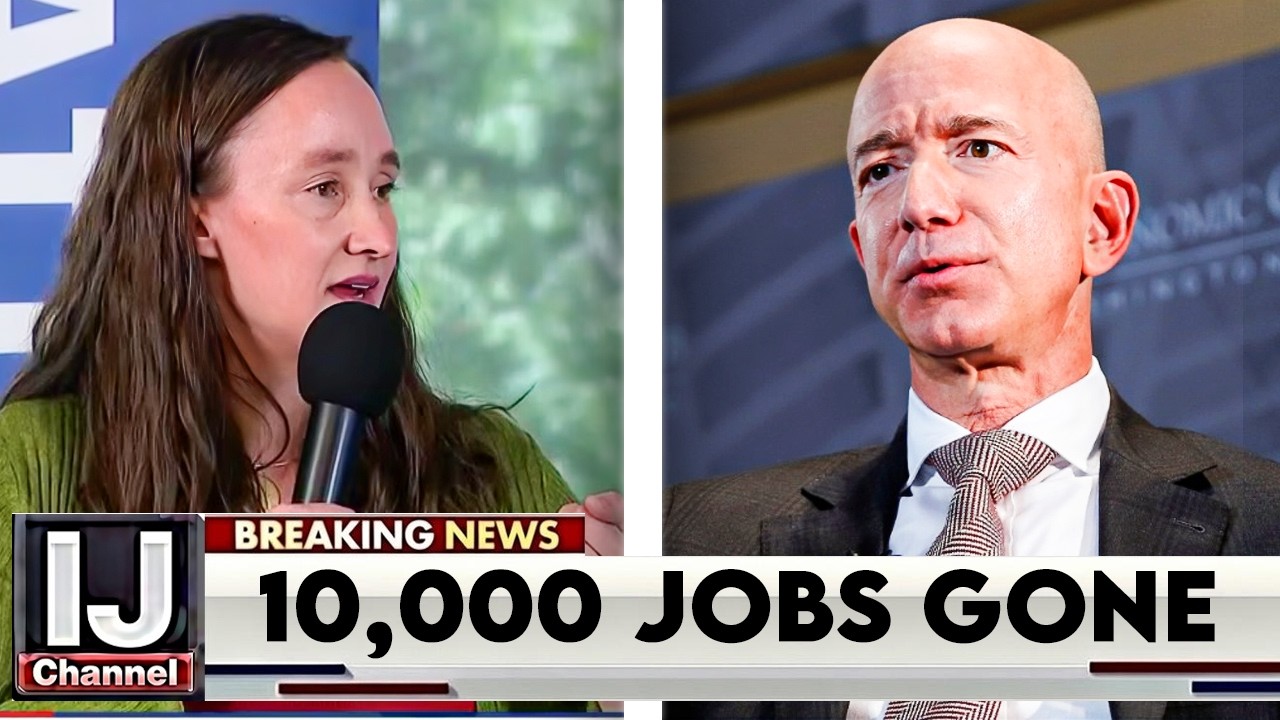
That represents a drop of roughly 10,000 jobs from the 2020 peak, a decline that has left downtown streets quieter and local economies reeling.
The shift is no accident.
Three powerful forces are driving Amazon’s transformation: geography, real estate realities, and brutal corporate restructuring.
First, the company has been aggressively relocating growth across Lake Washington to Bellevue, the very suburb where Bezos launched the business as Cadabra in 1994 from a rented home garage.
The website launched as Amazon.com the following year and sold $12,000 worth of books in its first week.
Now, history is circling back.
Amazon’s Bellevue workforce has exploded, climbing from around 12,000 in April 2024 to 14,000 by October of that year.
City reports indicate the company’s presence there has more than quadrupled since 2020.
The target is even more ambitious: 25,000 employees.
Major new towers are rising to accommodate them, including the striking 555 Tower, known as the Sonic, and the 43-story Bellevue 600, the tallest building in the city and the tallest Amazon has ever built.
A senior Amazon public policy director described the Eastside as the future home for the majority of the company’s growth, a clear signal that Seattle’s dominance is waning even as executives insist the entire Puget Sound region remains one unified headquarters called HQ1.
The real estate changes are equally dramatic.
Since 2020, Amazon has vacated more than one million square feet of office space in Seattle across at least six buildings near its core campus.
In 2024 alone, it surrendered nearly 595,000 square feet.
Specific exits paint a picture of retreat.
The company walked away from properties at 2001 8th Avenue and 1800 9th Avenue in 2023.
The lease on Metropolitan Park North lapsed in late 2024, displacing around 800 workers.
Port 99, once home to 2,000 employees, emptied in April 2023.
And in May 2026, Amazon announced it would depart the 251,000-square-foot Kumo building at 1915 Terry Avenue.
One particularly telling case involved the massive 722,000-square-foot space in the 58-story Rainier Square Tower.
Back in 2019, Amazon decided to sublease the entire floor plate rather than occupy it, citing ongoing evaluations of its space needs.
These moves have devastated downtown Seattle’s commercial real estate market.
Office vacancy rates soared past 30 percent by late 2024 and hit a record 35.6 percent by the end of 2025, according to Cushman & Wakefield.
The ten most valuable downtown office buildings lost more than half their value since 2021.
Empty floors have translated into plunging property values and strained city finances.
Yet nothing captures the human drama quite like the wave of layoffs.
In 2022 and 2023, Amazon eliminated around 27,000 corporate roles in its largest cuts at the time.
That record was shattered on October 28, 2025, when the company announced about 14,000 additional corporate job reductions, described by CNBC as the steepest in its 31-year history.
Reuters suggested the total could reach 30,000.
Washington state alone lost 2,330 jobs in that round.
Then, on January 28, 2026, another 16,000 corporate cuts followed.
GeekWire reported more than 4,500 corporate workers in Washington impacted across these two brutal rounds.
Altogether, the reductions represented roughly nine percent of Amazon’s global corporate workforce of about 350,000.
Senior Vice President Beth Galetti emphasized the need for a leaner organization with fewer layers and greater ownership.
CEO Andy Jassy offered a different perspective on the earnings call, insisting the moves were not primarily financially driven nor immediately tied to artificial intelligence.
Yet Jassy had previously told employees that generative AI and automated agents would reduce the need for certain roles while creating demand for others.
The cuts hit engineers hard, with CNBC reporting over 1,800 let go even as the company pushed for faster innovation.
Notably, these reductions targeted white-collar corporate staff while Amazon continued hiring hundreds of thousands of seasonal warehouse workers for the holidays.
The human and economic toll extends far beyond Amazon’s walls.
Small businesses that relied on the daily influx of thousands of well-paid tech workers now face empty sidewalks and declining sales.
The Puget Sound Business Journal highlighted the challenges for local establishments as desks disappear.
Amazon confirmed it will not renew the lease on a seven-story building in Denny Triangle just blocks from headquarters, part of a broader plan to cut 49,000 desks company-wide by year’s end.
One visualization outside T-Mobile Park, which holds about 49,000 fans, drives the point home: filling every seat in the stadium represents the scale of office space being eliminated.
This contraction has sparked intense debate about Seattle’s future.
Economists warn of a potential “doom loop,” a vicious cycle where empty offices erode the tax base, retail shutters, disorder increases, and more companies flee.
Downtown lost roughly 13,000 jobs in 2025, the largest drop since the early pandemic.
Payroll tax shortfalls have strained city budgets, and high vacancy rates between 32 and 36 percent continue to worry leaders.
Yet there are glimmers of hope.
Downtown foot traffic hit its highest post-pandemic level in July 2025, reaching 154,000 daily visits, a seven percent increase from the previous year.
The residential population has swelled to about 110,000, an 80 percent jump since 2010.
John Scholes of the Downtown Seattle Association declared, “We’ve avoided the doom loop,” crediting Amazon’s return-to-office mandate as a turning point.
Since January 2, 2025, the company has required employees to work five days a week in the office, sending around 50,000 workers back into Seattle buildings and boosting activity to levels reminiscent of 2019.
Still, Scholes warned that downtown remains fragile.
High office and retail vacancies continue to threaten the tax base.
Amazon frames its actions as consolidation rather than abandonment, pointing out that Seattle still holds the largest single concentration of its employees.
From the company’s perspective, the Puget Sound region operates as one interconnected headquarters.
But from street level in downtown Seattle, the changes feel seismic.
Storefronts that once thrived on the energy of Amazon workers now stare at uncertain futures.
Tax revenues fluctuate with every building Amazon empties.
The city that hosted the birth and explosive adolescence of one of the world’s most valuable companies is learning to navigate life with a less dominant corporate partner.
Jeff Bezos’s personal move to Florida adds a poignant, almost symbolic layer to the saga.
The founder who transformed a garage startup into a global behemoth is stepping back from the city that witnessed his greatest triumphs.
Meanwhile, Amazon presses forward with its evolution, embracing new technologies, optimizing real estate, and redistributing its massive workforce.
The numbers tell a clear story: 49,000 desks cut, over a million square feet vacated in Seattle, growth surging in Bellevue toward 25,000 jobs, and the two largest layoff rounds in company history executed in rapid succession.
Seattle retains tremendous strengths, including a vibrant residential core and Amazon’s continued substantial presence.
Yet the era of unchecked corporate expansion that defined the city for a generation has ended.
As Seattle grapples with this new reality, one truth stands out.
The company that once seemed to swallow the city whole is now recalibrating, forcing the metropolis to adapt.
Whether this marks the beginning of a painful decline or the painful birth of a more balanced future remains to be seen.
What is certain is that the dramatic transformation of Amazon’s relationship with Seattle will echo through the region for years to come, reshaping lives, businesses, and the very identity of a city that rode the tech boom like few others.
The story is still unfolding.
Empty desks stand as silent witnesses to the shifts.
Small business owners scan quieter streets with concern.
City leaders balance optimism with caution.
And somewhere across the water in Bellevue, new towers rise, signaling where Amazon envisions its next chapter.
Seattle, the city that gave birth to an empire, now faces the challenge of thriving in its shadow.
The drama is far from over.
