
A simple act of kindness can spark a powerful transformation—and one emotional video has become a small, shining example of that. In a short clip that’s made the rounds on social media, a homeless man is gifted a free haircut, and what unfolds over a few quiet minutes is nothing short of life-changing.
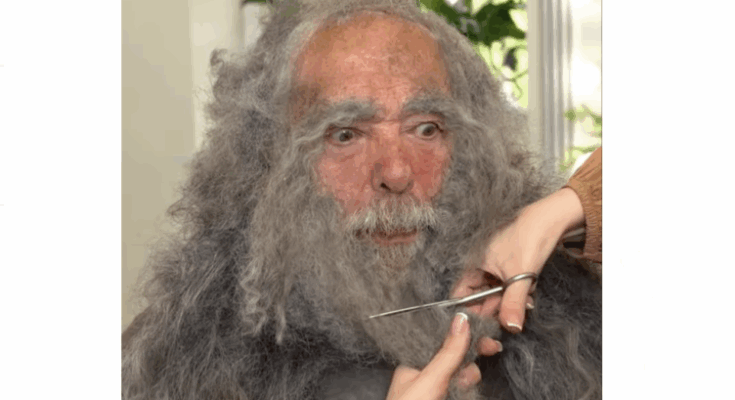
When the video opens, he is seated on a bench, bundled in a worn coat with a blanket draped around his legs. His hair hangs long and uneven, and a heavy beard hides the contours of his face. There’s a guarded quality to his movements—head bowed, shoulders slightly hunched—as if he’s grown used to shrinking to make room for the world’s indifference. People walk by, some glancing, most not seeing. The setting is ordinary: a sidewalk outside a small barbershop, the hum of traffic in the background, a couple of folding chairs and a portable mirror propped up against the glass.
The barber in the video approaches with an easy, unassuming manner. He kneels to speak at eye level, offers a warm smile, and gestures to an empty chair. There’s no spectacle—no camera crew, no flourish—just two individuals sharing a moment. The man hesitates for a beat, then accepts. That small acceptance feels like trust; it is the first ripple in a gradual, remarkable change.
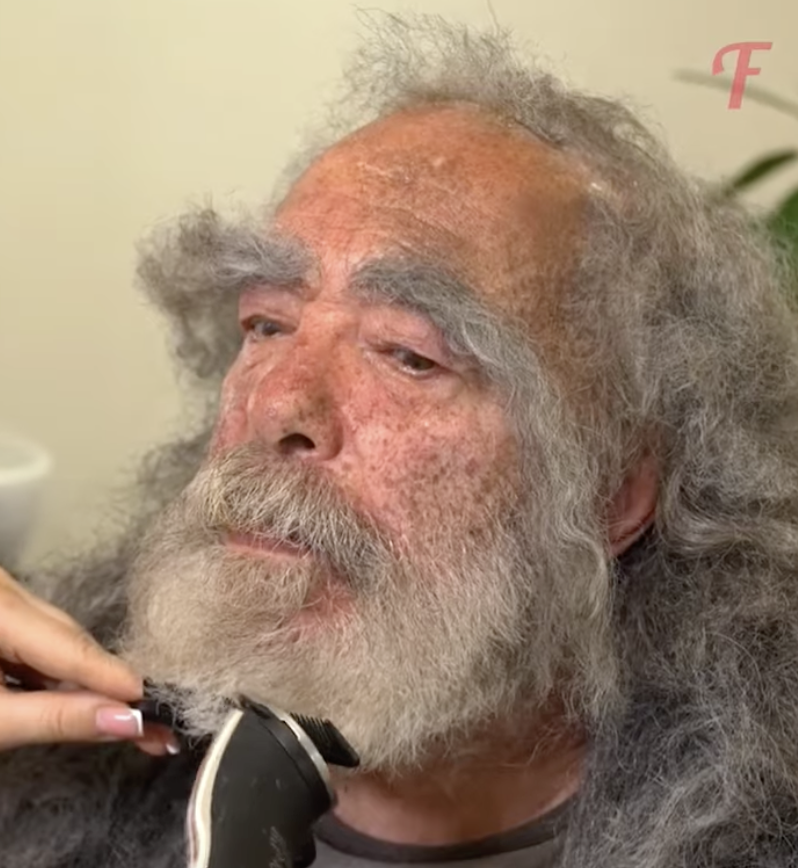
As the clip continues, the barber sets to work with patient precision. He begins by combing through the thick tangles, then gently trims around the ears and neckline to create a clean frame. You can almost hear the soft clacks of scissors mixing with the passing city noise. Between careful snips, the barber talks—light, ordinary conversation about the weather, about nothing in particular—simple human exchange that helps break the invisible barrier between them. It’s not just hair being removed; it’s layers of anonymity being peeled back.
With each falling lock, the man’s expression shifts. At first there is a guarded curiosity, then a tentative relaxation. When the clippers buzz along the sides and the beard is shaped, his shoulders seem to unclench. He glances up at the mirror and, in that brief, private moment, his face registers something like recognition—recognition of himself, perhaps, or of a possibility. His posture straightens almost imperceptibly. The eyes that had been shadowed by hair and fatigue start to brighten.
What makes the clip so moving is the subtlety of the transformation. There’s no instant magic cure; it’s gradual, human, believable. A fresh haircut doesn’t fix the structural problems of homelessness, but it removes a visible barrier that often amplifies shame and exclusion. Many people living on the streets lack access to basic grooming. Without clean clothes or a tidy appearance, they frequently encounter immediate judgment—doors closed, job opportunities denied, conversations cut short. Appearance can shape first impressions in ways that reverberate through someone’s entire day, and a modest change can be the difference between being overlooked and being seen.
The barber’s kindness extends beyond the scissors. He offers tips about daily maintenance and gifts a small toiletry kit—soap, a comb, a razor—items most of us take for granted. He tucks encouragement into the exchange: a suggestion to visit a local shelter for hot meals, an offer to come by on weekends if the man ever needs another trim. It is practical help combined with dignity. You can see how much that matters in the man’s face: his smile at the end is not performative, it is a quiet, genuine expression of relief and gratitude.
People who watch the video often comment that the man looks years younger after the haircut, and not just because of the shorter hair or the absence of a scraggly beard. It’s because his whole bearing changes—head up, eyes alive, a small, steady smile. Friends, neighbors, even passersby who witness such transformations often say they notice a renewed spark of hope. For some, a groomed appearance can open the door to re-entering the workforce—walking into an interview with a trimmed beard and clean hair sends a signal that someone is ready. For others, it can help rebuild fractured relationships by making it easier to reconnect with family members who may have been put off by years of neglect.
The video resonates because it captures a universal truth: beneath every rough exterior there is a human being with a story, a history, and the same need for dignity as anyone else. The barber didn’t solve all of this man’s problems in a single afternoon, but he did something arguably just as important—he helped restore a piece of that man’s identity. That restoration, small as it may seem, can be catalytic. It can nudge someone from resignation toward possibility.
In the final frames, the man steps away from the makeshift styling station and turns to face the camera. The smile lingers, easy and unforced. He runs a hand through his hair, feeling the smoothness of the cut, and then exhales—part relief, part quiet joy. The haircut was more than a change of appearance; it was the beginning of a fresh chapter. The clip leaves viewers with a simple message: sometimes the most powerful transformations start with an act of human kindness—time, attention, and respect—and the world is better for it.
