Iran’s blockade crisis has reached a dangerous new stage, and the regime’s own words may have exposed just how fragile its survival strategy has become.
For 47 years, the Islamic Republic told its people that no outside enemy could break Iran.
It claimed it had survived sanctions.
It claimed it had survived assassinations.
It claimed it had survived war, isolation, and international pressure.
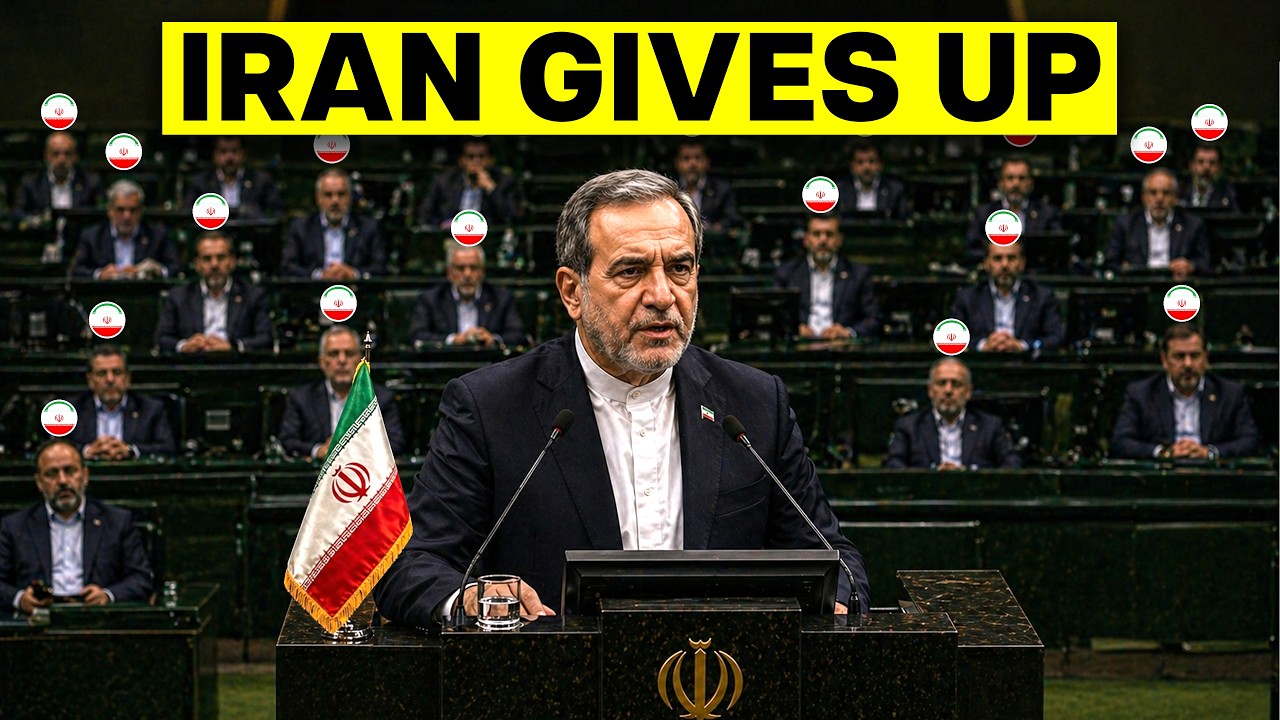
But just 11 days into a U.S. naval blockade, Iranian officials reportedly went on national television with a very different message.
They asked citizens to eat less and use less electricity.
That was not defiance.
That was desperation wearing the costume of public guidance.
The statement instantly changed the meaning of the crisis.
This was no longer only about oil tankers, warships, or the Strait of Hormuz.
It was about food, lights, kitchens, factories, and the daily life of ordinary Iranians.
A blockade becomes truly dangerous when it leaves the battlefield and enters the home.
That is exactly what appears to be happening now.
For days, attention focused on what Iran could no longer export.
That made sense because oil revenue is the financial bloodstream of the regime.
It funds the state.
It funds the IRGC.
It funds security forces, weapons networks, and political survival.
But the blockade has another side that may be even more painful.
It is not only stopping ships from leaving Iran.
It is stopping ships from entering Iran.
That means the crisis is no longer just about money Iran cannot earn.
It is also about supplies Iran cannot receive.
The seizure of the cargo ship Tusca became a symbol of this second pressure point.
According to the account, the vessel was headed toward Iran from Southeast Asia with cargo that allegedly included weapons-related materials.
By stopping it, the U.S. Navy showed that the blockade was not merely aimed at oil exports.
It was aimed at resupply.
That matters because Iran does not only depend on foreign trade for military equipment.
It also depends on imports for consumer goods, industrial needs, and food.
The account claims Iran imported roughly $60 billion in goods through seaports last year.
That would equal around $160 million in goods every day.
Behind those numbers are the items that keep a country moving.
Electronics.
Factory equipment.
Medicine.
Staple grains.
Cooking oils.
Seeds.
Food supplies.
The food issue is especially explosive.
Iran is not fully self-sufficient when it comes to feeding its population.
According to the account, as much as 40 to 60 percent of its food supply may depend on imports.
That means a maritime blockade can quickly become a political crisis.
When food slows, fear accelerates.
Markets react.
Prices rise.
Families begin buying more than they need because they are afraid of tomorrow.
And once panic enters the food system, no speech from a president can easily push it back out.
This is why the televised request was so damaging.
A government that asks people to reduce consumption is admitting the pressure is real.
A government that asks people to use two lights instead of ten is admitting the grid is under strain.
A government that warns about dissatisfaction is admitting it fears the streets.
That was the most revealing part.
Iranian officials were not only talking about conservation.
They were talking about public anger.
They understood that shortages can become protests.
They understood that empty shelves can turn into political slogans.
They understood that inflation can do what missiles cannot.
Iran’s food situation was already under pressure before the blockade.
The account describes monthly food inflation so severe that prices were rising at levels ordinary wages could not match.
Food inflation is uniquely dangerous because people cannot simply opt out of it.
A family can avoid buying luxury goods.
A worker can delay a phone upgrade.
A student can stop eating out.
But no one can stop buying bread, rice, oil, and basic meals.
When food becomes unaffordable, politics becomes personal.
That personal anger may now be colliding with a wider record of mismanagement.
Iran has already faced water shortages, energy strain, and infrastructure failures.
Officials have even warned that Tehran could face severe rationing or worse if water shortages continue.
Experts have blamed years of bad planning, illegal wells, inefficient agriculture, and overbuilding of dams.
That history matters because it weakens the regime’s excuse.
The blockade may be external.
But the lack of preparation is internal.
The shortage is not only the result of U.S. pressure.
It is also the result of years of fragile planning by a government that knew confrontation was possible.
If Iran intended to weaponize Hormuz, why did it not prepare for Iranian ports to be targeted in return.
If Iran knew it depended heavily on imported food, why did it not build larger reserves.
If Iran expected another conflict, why are officials asking people to cut back after only 11 days.
Those are the questions that can haunt a regime.
They shift blame from the enemy outside to the leadership inside.
They make citizens ask why they are paying the price for strategies they did not choose.
The irony is difficult to miss.
Iran tried to use maritime pressure as a weapon.
Now maritime pressure is being used against Iran.
The regime wanted to make the world feel vulnerable.
Instead, it may have exposed its own vulnerability.
That is why the crisis has pushed Tehran back toward negotiations, despite public statements that Iran would not negotiate under pressure.
According to the account, an Iranian delegation traveled to Islamabad to discuss relaunching talks with the United States.
Iran reportedly wanted a rational and fair negotiation while rejecting American red lines.
But the diplomatic track appears unstable.
Trump reportedly canceled a planned envoy trip to Pakistan and said Iran could call the United States directly if it wanted to talk.
That message was blunt.
It suggested Washington believes it has the stronger hand.
It also suggested that the U.S. is no longer willing to chase Iran through long-distance diplomacy while the blockade keeps tightening.
This is where time becomes the most powerful weapon.
Washington can wait while ships enforce the line.
Iran cannot wait as easily while imports stall, food pressure grows, oil revenue falls, and inflation rises.
If talks collapse completely, the danger becomes even greater.
The account warns that renewed war could push inflation to catastrophic levels, with monthly inflation potentially rising far beyond anything normal households can survive.
That would mean prices moving faster than salaries, savings, and public patience.
For ordinary Iranians, the crisis would not be measured in strategy.
It would be measured in bread, fuel, medicine, and electricity.
For the regime, that is the nightmare.
It can control media narratives.
It can arrest protesters.
It can blame foreign enemies.
But it cannot easily hide hunger.
It cannot hide dark apartments.
It cannot hide food prices that double faster than families can adapt.
The televised request to consume less was meant to calm the public.
Instead, it may have revealed the weakness officials were trying to conceal.
It showed that the blockade has already moved beyond military pressure.
It has entered the psychological core of the regime’s survival.
A government that once promised resistance is now asking citizens to make sacrifices just to stretch the system a little longer.
That does not sound like victory.
It sounds like a countdown.
The coming days may determine whether Iran returns seriously to negotiations, tries to escalate, or continues sliding deeper into economic pressure.
But one thing is already clear.
The myth of invincibility has been damaged.
Not by a battlefield defeat alone.
Not by one seized ship alone.
Not by one failed negotiation alone.
It was damaged by the regime’s own message to its people.
Eat less.
Use less.
Endure more.
That is the sound of a government discovering that survival slogans do not fill stomachs.
And once that truth reaches the streets, no blockade is needed to make the pressure explode.
